
Beacon Machine Manufacturing Co.,ltd
 Language
  EN
EN RU
RU ES
ES DE
DE EL
EL IT
IT JA
JA KO
KO PT
PT ID
ID SR
SR UK
UK VI
VI TH
TH TR
TR MS
MS BE
BE AR
ARSolenoid vs. Piezo Diesel Injectors: Working Principles & Differences
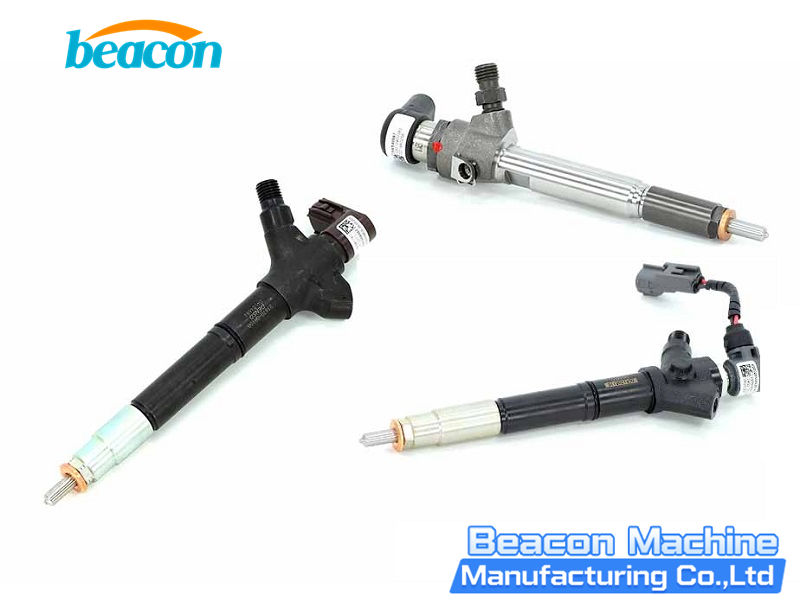
1. Working Principles of Diesel Injectors
In modern Common Rail systems, the injector is the heart of engine performance. Understanding the difference between Solenoid Injectors and Piezo technology is essential for maintenance and equipment selection.
Solenoid Injectors (Electromagnetic)
The operation relies on a magnetic field. When the ECU energizes the coil, a magnetic field is created, attracting the armature. This opens the control valve, relieves pressure in the control chamber, and allows the needle to lift, spraying fuel. When power is cut, a spring resets the valve.
Piezo Injectors (Piezoelectric)
Instead of magnetism, these use the physical properties of crystals. When the ECU applies high voltage (100–200V), the piezo ceramic crystal instantly expands. This expansion is hydraulically amplified to push the control valve open directly.
2. Why are Piezo Injectors Faster?
The core advantage of Piezo Injectors is speed. They are typically 2 to 3 times faster than solenoids.
- No Magnetic Buildup: Solenoids suffer from inductance delay (L/R time constant) while building the magnetic field.
- Direct Action: Piezo crystals change structure instantly upon voltage application.
- Response Time: Solenoids take ~300–500 microseconds, whereas Piezo units react in just ~100–150 microseconds.
3. Higher Precision and Efficiency
Because the expansion of the piezo crystal is proportional to the voltage applied, the stroke control is incredibly precise. This allows for:
- Micro-injections: Capable of extremely small fuel quantities (a few mm³).
- Multiple Injections: While solenoids typically manage 3-5 injections per cycle, Piezo injectors can achieve 5-7 or more.
- Benefits: Smoother combustion, reduced knock, and compliance with strict Euro 5/6 emissions standards by lowering NOx.
4. Disadvantages of Piezo Technology
Despite their performance, Piezo injectors have drawbacks which is why improved Solenoid versions are still in use:
- High manufacturing cost.
- Complex driving circuits due to high voltage requirements.
- Extreme sensitivity to voltage fluctuations and fuel contamination.
- Difficult to repair compared to the more robust solenoid design.
Related products
Beacon Machine Manufacturing Co.,ltd
Quick Links
contact
WhatsApp: +86-13570429157
Tel / Wechat: 0086-13570429157
Email: ellenzhang@beacon-machine.com
Add: High Technology Industrial Park of Taian city,Shandong province,China


quick order
We will reply to your email within 2 hours