
Beacon Machine Manufacturing Co.,ltd
 Language
  EN
EN RU
RU ES
ES DE
DE EL
EL IT
IT JA
JA KO
KO PT
PT ID
ID SR
SR UK
UK VI
VI TH
TH TR
TR MS
MS BE
BE AR
ARThe Ultimate Guide to Diesel Injector Testing in 2026: Common Rail, Piezo, and HEUI
The Ultimate Guide to Diesel Injector Testing in 2026: Common Rail, Piezo, and HEUI
Diesel engines are currently facing higher pressures and tighter emission regulations than at any time in history. This evolution has pushed Common Rail systems, Piezo injectors, and HEUI pumps to their absolute engineering limits.
For diesel workshops, this means the margin for error has vanished. Injector testing has evolved from a simple check to a critical, high-precision process.
In this guide, we explore why advanced testing matters, how modern test benches function, and what technicians must look for when diagnosing complex injection systems.
1. Why Injector Testing Is Critical in 2026
Modern diesel fuel systems are engineering marvels, operating under extreme conditions:
-
Rail Pressures: Regularly exceeding 2,500 bar.
-
Tolerances: Manufactured with sub-micron precision.
-
Response Times: Injectors must fire in less than 200 microseconds.
With such tight specifications, even a microscopic deviation can lead to significant vehicle issues, including:
-
Incomplete combustion and black smoke.
-
Excessive fuel consumption.
-
Loss of engine torque and power.
-
Emission test failures (a major concern for fleet operators).
-
Hard starting or sudden engine shutdown.
The Reality: As global emission standards (such as Euro 6 and Tier 4) tighten, "guessing" the problem is no longer an option. Accurate, data-driven testing is essential.
2. Common Rail Injector Types and Common Failures
Different technologies fail in different ways. A professional technician must be able to identify these specific symptoms:
✔ Solenoid Injectors (Bosch, Delphi, Denso)
These are the workhorses of the industry but are prone to wear over time.
-
Internal Leakage (Back leak): Causes low rail pressure and hard starting.
-
Needle Sticking: Results in knocking or misfire.
-
Weak Solenoid Response: Affects timing and fuel metering.
✔ Piezo Injectors (Siemens/VDO, Bosch)
Known for speed and precision, but fragile.
-
Piezo Stack Expansion Loss: The crystal stack loses its ability to expand, causing no injection.
-
High-Speed Valve Sticking: Leads to erratic engine performance.
-
Internal Short Circuits: Often caused by insulation failure.
✔ HEUI Injectors (CAT C7/C9, Ford PowerStroke)
Hydraulically Actuated Electronically Controlled Unit Injectors are unique to heavy-duty applications.
-
Poppet Valve Wear: Causes cold start issues (stiction).
-
Oil Side Leakage: High-pressure oil bypasses internal seals.
-
Ball Seat Erosion: Affects fuel delivery consistency.
3. How a Modern Test Bench Diagnoses Issues
A professional test bench doesn't just "spray fuel"; it evaluates the injector's behavior under controlled, realistic engine conditions.
Key testing parameters include:
| Parameter | What It Diagnostics |
| Full Load (FL) | Maximum fuel delivery capability at peak pressure. Ensures the engine achieves full power. |
| Pilot Injection (VE) | Pre-injection stability. Critical for noise reduction and smooth idling. |
| Back Leakage (LL) | Assessing the internal sealing condition of the control valve and nozzle. |
| Response Time | The electrical and mechanical reaction speed (delay) of the injector. |
| AHE / Dynamic Lift | Measures the armature stroke under load (crucial for Bosch solenoid tuning). |
Pro Tip: A correct diagnosis relies on comparing these real-time results against the OEM database integrated into your test bench software.
4. Why Workshops Must Upgrade Their Equipment
If you are still using mechanical benches or outdated simulators, you are missing a large portion of the market. Older equipment simply cannot test:
-
Piezo Technology: Requires specific drive voltages and back-pressure control.
-
New Generation Injectors: Such as Bosch CRIN 4.2, Denso G3S/G4S, and HP5 pumps.
-
HEUI Systems: CAT C7/C9/C13 requiring high-pressure oil actuation.
-
Injector Coding: Modern vehicles require IMA/ISA/QR coding to balance the engine.
Investing in a modern test bench leads to:
-
Higher Repair Accuracy: Eliminate guesswork.
-
Reduced Comebacks: Fix it right the first time.
-
Customer Satisfaction: Provide print-out reports as proof of quality.
-
Future-Proofing: Ability to service the latest trucks and machinery.
5. How to Choose a Reliable Test Bench
Not all test benches are created equal. When selecting a supplier for your workshop, look for these essential features:
-
High-Pressure Capability: Stable generation of 2500+ bar pressure.
-
Precision Sensors: Digital flow meters for accurate measurement (gear or mass flow).
-
Safety Systems: Protection for the bench’s ECU driver circuits against shorted injectors.
-
Reporting System: Ability to generate and print clear test reports for customers.
-
Technical Support: Reliable after-sales service and regular database updates.
Conclusion
The diesel industry is becoming more sophisticated every year. High-quality injector testing equipment is not just a tool—it is the foundation of accurate diagnostics and a profitable repair business.
If you work in diesel service, upgrading your testing process in 2026 will give you a real technical advantage over competitors.
Looking for a professional test solution?
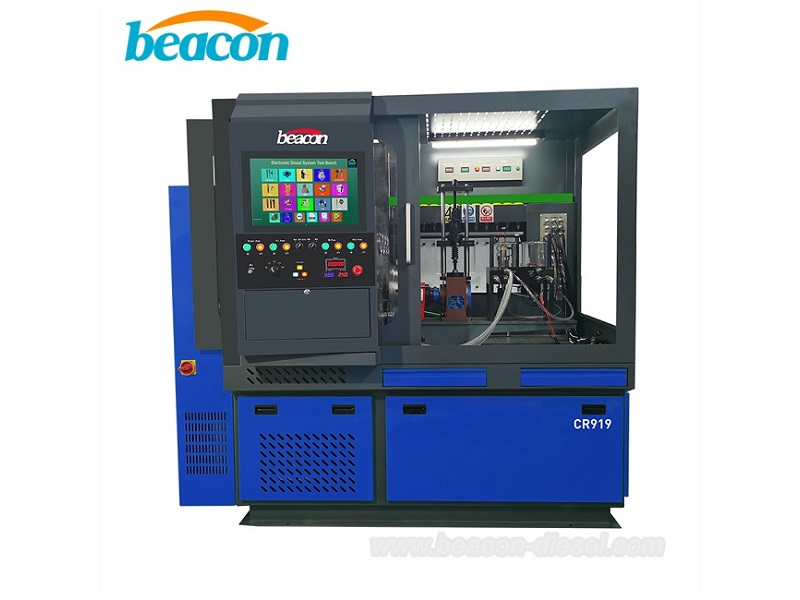
Explore [Beacon Diesel's range of Test Benches and Tools] and ensure your workshop is ready for the future of diesel repair.
Related products
Beacon Machine Manufacturing Co.,ltd
Quick Links
contact
WhatsApp: +86-13570429157
Tel / Wechat: 0086-13570429157
Email: ellenzhang@beacon-machine.com
Add: High Technology Industrial Park of Taian city,Shandong province,China


quick order
We will reply to your email within 2 hours