
Beacon Machine Manufacturing Co.,ltd
 Language
  EN
EN RU
RU ES
ES DE
DE EL
EL IT
IT JA
JA KO
KO PT
PT ID
ID SR
SR UK
UK VI
VI TH
TH TR
TR MS
MS BE
BE AR
ARHEUI Injector Test Results Explained: Oil Pressure, Response, Fuel Delivery and Leakage
A HEUI (Hydraulically Actuated Electronically Controlled Unit Injector) needs both a fuel supply and high-pressure oil for actuation. An electronic command controls the injector, while high-pressure oil drives an internal intensifier piston to generate the pressure needed for fuel injection. A HEUI test report therefore has to be read in the context of the oil circuit, fuel circuit, electrical command and injector itself. The Navistar engine training material and Ford system-operation summary describe how these elements work together.
This article explains how to interpret results. Test points and acceptance limits vary by manufacturer, injector part number and test bench. Use the test procedure for the exact part number for the final pass/fail decision.
1. Check the Test Conditions Before Reading the Numbers
- Record the injector's complete part number and the test-plan version.
- Confirm the fixture and connection method.
- Record fuel supply conditions, actuation-oil supply conditions and actuation-oil temperature.
- Record actual oil pressure, command pulse width, test count and the units used for each result.
In particular, check what “pressure” means in the report: actuation-oil pressure is a hydraulic condition supplied to the injector; fuel injection pressure at the nozzle is a different quantity. Even if the bench displays actuation-oil pressure, confirm where its sensor measures it. Do not relabel that reading as nozzle injection pressure. Ford explains that high-pressure oil acts through an intensifier piston to influence fuel injection pressure, while both pulse width and oil pressure affect fuel quantity. Source: Ford 6.0L system-operation summary
2. Actuation-Oil Pressure: Confirm That the Test Condition Has Been Established
Check whether target and actual oil pressure meet the requirements of the current test procedure. Also watch how pressure builds and whether it remains stable during the test. If the oil pressure does not reach the specified condition, abnormal fuel-delivery or response readings alone cannot establish that the injector is faulty.
First inspect the bench's actuation-oil supply, pressure regulation, sensor, lines and fixture seals; then repeat the test under the specified conditions. This sequence follows the system layout: the high-pressure oil pump, regulator, pressure sensor and injector all participate in establishing actuation-oil pressure. Ford also notes that high-pressure oil leaks, pump delivery and internal injector faults must be distinguished when diagnosing insufficient pressure on a vehicle. Source: Ford high-pressure oil system diagnostic bulletin
Do not use an idle or cranking oil-pressure value from one engine as the bench acceptance limit for another injector.
3. Response: First Establish What the Bench Actually Measures
“Response” on a report may refer to a delay after the electrical command, actual injection timing, or an interpretation based on dynamic fuel-delivery results. Read the bench and test-plan definition: what is the start event, what is the end event, and does the equipment directly detect the start of injection? If the bench only displays fuel quantity at different command pulse widths, use those results to observe dynamic changes. Do not present them as a precisely measured injection response time.
For abnormal response, check the drive signal, wiring contacts, actuation-oil pressure and oil temperature before investigating the injector's internal control mechanism. Oil condition matters too. Ford states that oil-thickening additives and poor maintenance can delay commanded injector response. That bulletin concerns particular Ford engines; it provides a diagnostic lead, not a universal response-time limit for all HEUI injectors. Source: Ford TSB 08-26-12
4. Fuel Delivery: Read It Together With Oil Pressure and Command Conditions
Fuel delivery is normally reported for a defined test point and a specified number of injections. To compare two results, confirm that injector type, actuation-oil pressure, fuel supply, command pulse width, oil temperature and units are the same.
The same injector can deliver different quantities when oil pressure or pulse width changes. If delivery is low under the specified conditions, check the fuel supply and bleeding, pressure stability, fixture and electrical connection in sequence. Once those conditions are correct, examine the injector together with its other test points. A pass at one point does not replace the remaining checks required by the plan or a repeatability check.
Caterpillar lists fuel delivery, timing, peak injection pressure and assembly leakage among the end-of-line checks for its remanufactured injectors. Fuel delivery therefore belongs in a wider performance assessment. That source does not provide acceptance limits that can be applied to every HEUI injector. Source: Caterpillar injector testing information
5. Leakage: Identify the Fluid and Measurement Location First
HEUI testing may include actuation-oil return, fuel-side leakage and nozzle sealing with the injector closed. A report that says only “leakage” is difficult to interpret without the measurement location, test pressure, energized or de-energized state, and measurement duration.
Normal operating oil return must be distinguished from abnormal leakage. Ford explains that, after its 6.0L injector is actuated, oil returns to the base-oil system through a return port. The same bulletin also discusses external leaks and internal injector faults that require diagnosis. Judge an oil-return reading against the test procedure for that injector; the presence of return flow by itself is not a fault. Source: Ford high-pressure oil system diagnostic bulletin
If leakage is abnormal, check fittings, fixtures and seals first, then identify which side of the injector is leaking. Investigate unintended fuel-to-oil leakage carefully. Caterpillar warns that injectors failing leakage specifications can cause fuel dilution of engine oil and premature component wear. Source: Caterpillar injector testing information
6. How Should the Four Results Be Read Together?
| Observation | First checks |
|---|---|
| Actuation-oil pressure does not meet the test condition and fuel delivery is low | Check the bench oil supply, regulation, sensor, lines and fixture first; retest after the specified pressure is established. |
| Oil pressure is stable, but one injector has abnormal delivery or dynamic behavior | Check that injector's connections, fixture and fuel supply, repeat the same test, then investigate the injector further. |
| Oil pressure and delivery meet requirements, but a leakage item is abnormal | Confirm the fluid, measurement location and test condition; rule out a test-connection problem before locating the leak. |
| Repeated results vary widely | Check oil temperature, pressure stability, supply and connections; measure again under consistent conditions. |
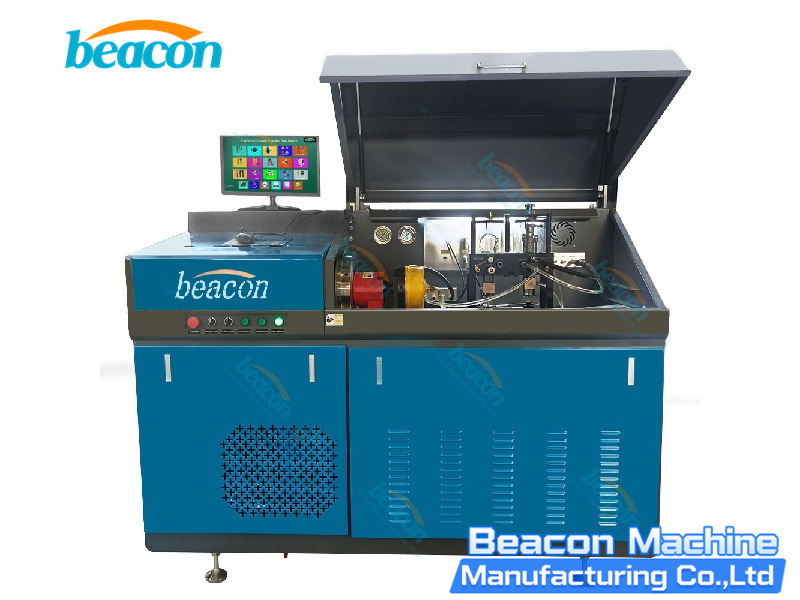
This table sets an order for investigation; it does not replace the limits for a particular injector. Workshops planning HEUI testing can review the CR708 common rail injector and pump test bench. Its product information lists optional HEUI dual circuits and dedicated fixtures. Before use, confirm the required fixture, test data and actual ordered configuration against the injector part number.
A useful HEUI test report retains the injector part number, test procedure, oil and fuel conditions, pressure measurement location, delivery at each test point, the definition of any response item, leakage measurement location and repeated results. Complete test-condition records make the four categories of data useful for a repair decision.
Related products
Beacon Machine Manufacturing Co.,ltd
Quick Links
contact
WhatsApp: +86-13570429157
Tel / Wechat: 0086-13570429157
Email: ellenzhang@beacon-machine.com
Add: High Technology Industrial Park of Taian city,Shandong province,China


quick order
We will reply to your email within 2 hours