
Beacon Machine Manufacturing Co.,ltd
 Language
 EN
 RU
 ES
 DE
 EL
 IT
 JA
 KO
 PT
 ID
 SR
 UK
 VI
 TH
 TR
 MS
 BE
 AR
Metal Debris Found in a Common Rail System: What Must Be Cleaned or Replaced?
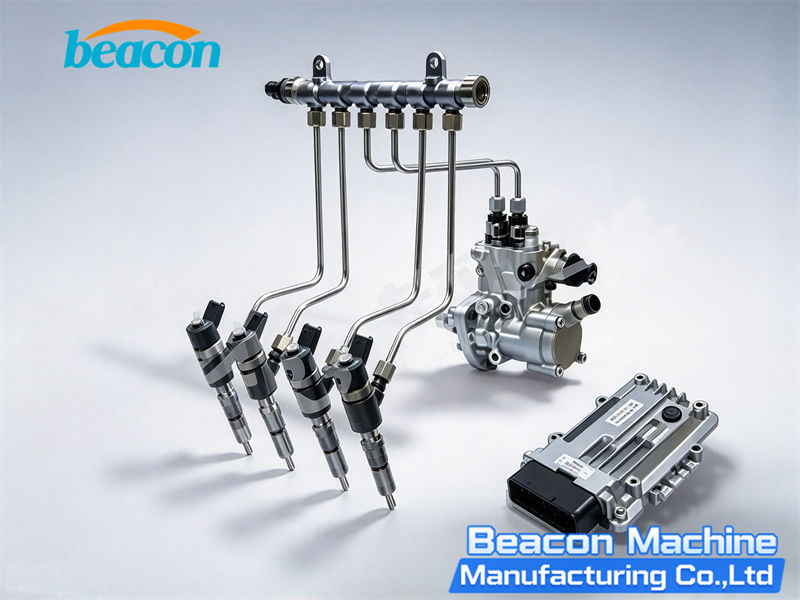
After metal debris is found in a fuel filter, rail or return line, identify its source and location and determine whether it has entered the high-pressure system. The inspection results and the applicable vehicle manufacturer's procedure define the repair scope.
1. Locate the Metal Debris
Stop further operation and record whether the debris was found in the tank, filter housing, high-pressure pump metering valve, rail or return fuel. Keep the work area and opened connections clean during sampling and disassembly so that external dirt does not enter the fuel system.
A Volkswagen TDI technical bulletin requires supply-pressure and internal-leakage diagnostics before inspecting the high-pressure pump metering valve. After removing the valve, the technician inspects the valve and its bore for metallic particles. Under that bulletin, if neither location contains metallic particles, diagnosis continues and the pump is not replaced under that bulletin. [1]
If metal debris is found in the tank or filter, determine whether it has entered the high-pressure system. International's diagnostic information for a specific engine handles these two findings separately. [3]
2. Determine What to Clean and What to Replace
| Component | Treatment principle |
|---|---|
| Fuel tank and in-tank supply components | Drain the contaminated fuel; clean and inspect the tank according to the vehicle procedure. Inspect the in-tank pump or supply module and decide on replacement from its condition and the manufacturer's instructions. |
| Low-pressure supply and return lines, and filter housing | Flush, inspect or replace them as the manufacturer specifies, and verify that residual debris has been removed. Replace the relevant filter elements. Whether the housing and lines can be reused depends on their design and the repair procedure. |
| High-pressure pump, rail, injectors and high-pressure pipes | Once metal contamination of the high-pressure system is confirmed, follow the vehicle-specific repair list for affected parts. Several manufacturer documents call for replacing the pump, rail, injectors and high-pressure pipes. |
| Connector tubes, sensors, pressure-control components and return branches | Check whether these parts have contacted contaminated fuel and review each item against the manufacturer's repair list. |
For the TDI vehicles covered by its bulletin, Volkswagen instructs technicians to clean the tank and flush specified supply and return lines after metallic particles are confirmed inside the high-pressure pump. The same procedure calls for replacing the pump, high-pressure pipes, rail, all injectors, injector return lines, filter and certain supply components. [1]
Stellantis repair information for specified 6.7L diesel vehicles lists the high-pressure pump, injectors, rail, connector tubes and high-pressure pipes among the replacement parts. It also sets out steps for the tank and low-pressure circuit. [2] Use the current repair list for the vehicle being serviced.
3. Follow the Vehicle Procedure for Flushing and High-Pressure Pipes
Use the manufacturer's instructions for cleaning agents and flushing steps. The Volkswagen bulletin permits a specified method for flushing certain low-pressure lines. Stellantis warns that harsh solvents can damage internal coatings in the fuel-system components covered by its procedure. These documents address different systems and steps. [1][2]
Check the reuse rule whenever a high-pressure pipe is removed. Delphi instructs technicians to fit a new pipe after removal on the common-rail systems covered by its guidance and to tighten it to the torque specified in the relevant workshop manual. [4]
4. Complete Assembly and Verification
Before installing new parts, confirm that any tank, low-pressure lines, return path and filter housing being retained have been treated as specified. Then fill and bleed the system and check for leaks using the vehicle procedure. If injectors are replaced, check whether new injector calibration data must be programmed; the Volkswagen bulletin explicitly requires this step for its covered vehicles. [1]
The repair record should include where the debris was found, inspection findings, cleaned and replaced parts, and verification results.
Key point: Establish the extent of metal contamination first. If contamination of the high-pressure system is confirmed, follow the vehicle-specific list for affected high-pressure components. Clean, inspect or replace the tank, low-pressure lines and return path as specified. Complete bleeding, leak checks and any required calibration after assembly.
References
- [1] Volkswagen, Diesel Fuel System Diagnosis and Repair technical bulletin. Applies to the models and years identified in the bulletin.
- [2] FCA US / Stellantis STAR Online, metal or other debris contamination in the high-pressure fuel system. Applies to the vehicles identified in the publication.
- [3] International, Supplemental 2017 A26 Fuel System Diagnostics.
- [4] Delphi, Common Rail High Pressure Pipes Replacement.
Related products
Beacon Machine Manufacturing Co.,ltd
Quick Links
contact
WhatsApp: +86-13570429157
Tel / Wechat: 0086-13570429157
Email: ellenzhang@beacon-machine.com
Add: High Technology Industrial Park of Taian city,Shandong province,China


quick order
We will reply to your email within 2 hours