
Beacon Machine Manufacturing Co.,ltd
 Language
  EN
EN RU
RU ES
ES DE
DE EL
EL IT
IT JA
JA KO
KO PT
PT ID
ID SR
SR UK
UK VI
VI TH
TH TR
TR MS
MS BE
BE AR
ARAnalysis of Marine Diesel Engine Injector Faults and Maintenance
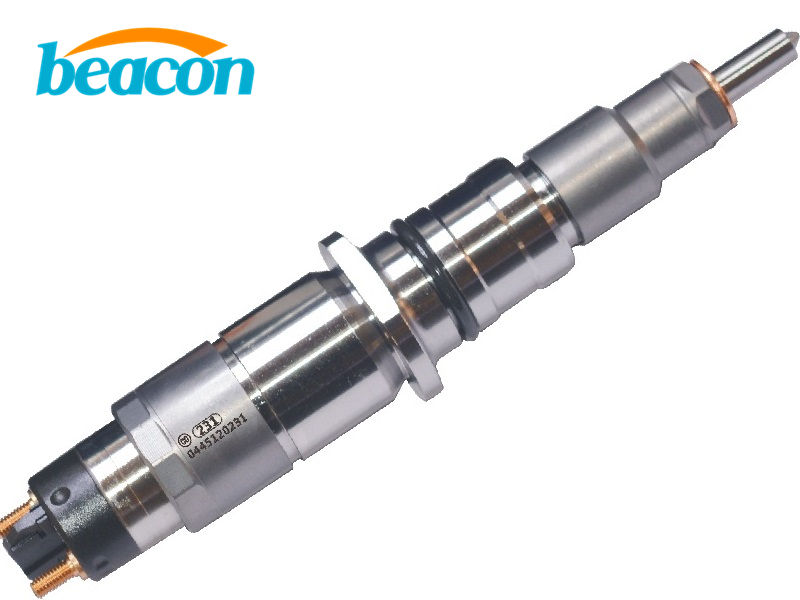
Analysis of Marine Diesel Engine Injector Faults and Maintenance
Abstract: The diesel engine is the heart of the ship, and the fuel injector is a major component of the diesel engine. Its working condition directly affects the performance of the diesel engine. Therefore, understanding and mastering the causes, characteristics, and elimination methods of injector faults is very important.
Keywords: Injector; Structural Features; Inspection; Adjustment
CLC Code: TK42 Document Code: A Article ID: 1672-3791(2012)04(c)-0107-01
1. Function and Requirements of the Injector
The function of the injector is to atomize the high-pressure fuel supplied by the fuel injection pump at a specific moment into fine fuel particles, inject them into the cylinder, and distribute them to the entire combustion chamber to mix well with the air and form a combustible mixture. When the fuel injector is not working well, it will cause difficulties in starting the diesel engine, black smoke during operation, a decline in power and economy, and unstable rotation. Phenomena such as abnormal noise, "cylinder knocking," and even fire stopping may occur.
Marine diesel engines have very strict requirements for injectors. There must be a certain injection pressure, injection distance (i.e., range), and a certain injection cone angle. The spray quality must be good, the injected oil particles must be both fine and uniform, and they can be distributed to the entire combustion chamber. It should also be consistent with the fuel injection pump to ensure that the injection starts and stops crisply.
2. Types and Structural Characteristics of Injectors
There are many types of injectors. Currently, most marine diesel engines use hydraulic needle valve injectors (also known as closed injectors). The structural situation of this injector affects the work of the diesel engine, mainly in the needle valve and needle valve body at its front core part. Hydraulic needle valve injectors can be divided into single-hole injectors and multi-hole injectors according to the number of spray holes.
Single-hole injectors have only one spray hole located in the center of the nozzle. The hole diameter is relatively large, the opening pressure is low, the injection pressure is relatively low, and the atomization quality is poor. It is mostly used on small high-speed diesel engines. Multi-hole injectors have multiple spray holes, which can be distributed evenly at the nozzle tip or on one side of the nozzle tip. Its hole diameter is relatively small, the pressure during the opening and closing of the needle valve and the injection process is high, and the atomization quality is good. Its spray shape should match the shape of the combustion chamber. It is mostly used on medium and low-speed marine diesel engines.
3. Injector Fault Analysis and Elimination Methods
The injector is located at the top of the combustion chamber and is directly exposed to high-temperature and high-pressure combustible gas. The working temperature is high, and the working conditions are poor. Thermal load and mechanical load often cause loose sealing of the needle valve couple, gas backflow, and even stoppage of work. In addition, whether the injector works well or not directly affects the economy, power, emissions, and reliability of the diesel engine. Therefore, it is necessary to conduct fault analysis and elimination of common injector faults.
The main form of damage to the fuel injector is wear. First, it mainly occurs on the sealing cone surface of the needle valve and the needle valve body, and the cylindrical mating surface of the needle valve couple; secondly, it is the end face corrosion of the needle valve body and the enlargement and out-of-roundness of the spray hole. For these problems in precision couples, the parts where the injector often wears are the sealing cone surface, the spray hole, and the guide surface of the needle valve and the needle valve hole.
(1) Wear of the needle valve cone and the needle valve body seat:
The wear is caused by the impact of the injector spring and the scouring of impurities in the diesel oil. Wear of the sealing cone will cause the contact surface of the sealing belt to widen, deform, and reduce the finish. The result is injector dripping, carbon deposits forming near the nozzle hole, and even blocking the nozzle hole. Seriously dripping injectors will also make intermittent knocking sounds during work, leading to uneven work of the diesel engine and black smoke from the exhaust. Elimination method: Disassemble the injector, stick a little chrome oxide fine grinding paste on the head of the needle valve to grind the cone surface, then wash it with diesel oil, and finally put it into the injector for performance testing. If the performance test fails, the needle valve couple needs to be replaced. In the actual repair process, pay special attention not to grind the grinding paste onto the needle valve hole. Toothpaste or engine oil can also be used for maintenance if there is no grinding paste.
(2) Wear of the cylindrical mating surface of the needle valve couple:
This is caused by impurities contained in the diesel oil. Most of the wear occurs at the lower end of the guide part, causing the guide part surface of the needle valve to show fine axial scratches. The result is an increase in the oil return volume of the injector, a decrease in the fuel injection volume, a decrease in the fuel injection pressure, a delay in the fuel injection time, poor atomization and dripping, and the formation of carbon deposits. In this state, the diesel engine cannot work at full load, resulting in difficulty in starting. To prevent the wear of the needle valve and the needle valve hole guide surface, the diesel oil filter should be kept clean, and the sludge in the filter and the oil tank should be discharged frequently to prevent the intrusion of grit and impurities and accelerate the wear of the needle valve couple. For severely worn needle valves, new needle valve couples should be replaced in time.
(3) Enlargement of the nozzle hole diameter caused by end face corrosion of the needle valve body:
Generally 0.12mm ~ 0.8mm. The enlargement of the spray hole diameter is due to the long-term scouring of impurities entrained in the high-pressure diesel oil. After the spray hole wears, fine axial groove marks appear on the hole wall, the spray hole becomes larger and loses its roundness, causing the injection pressure to drop, the injection distance to shorten, and the atomization to deteriorate. Carbon deposits accumulate inside the hole. Carbon deposits around the spray hole of the needle valve body will generate heat accumulation, which not only affects fuel atomization but also causes the needle valve body to overheat and be damaged. When carbon deposits accumulate on the needle valve body, a copper wire brush can be used to remove them. When the spray hole is blocked, a through-hole tool can be used to clear it. When clearing the hole, do not rotate violently or use excessive force to avoid breaking the through-hole needle in the spray hole.
By strengthening the fault analysis and elimination of marine diesel engine injectors, the failure rate of diesel engines can be effectively reduced. Injector faults will directly lead to abnormal work of the diesel engine, but not all diesel engine faults are caused by the injector. Therefore, the judgment of injector faults should be careful, and the injector should not be dismantled for inspection rashly, thereby damaging its processing and assembly accuracy and causing unnecessary losses. In addition, to reduce injector faults and extend the service life of the injector, maintenance and preservation work of the injector should be done well at ordinary times.
4. Inspection and Adjustment of Marine Diesel Engine Injectors
According to the operation of the diesel engine, periodic preventive inspections and irregular diagnostic inspections must be maintained on the injector. If any inappropriateness is found during the inspection, maintenance and adjustment must be added immediately to ensure that the injector always has good atomization quality. The inspection content includes opening pressure, atomization quality, and the sealing of the needle valve couple.(1) Inspection and adjustment of the injector opening pressure:
The opening pressure refers to the minimum injection pressure required for the needle valve to overcome the pre-tightening force of the pressure regulating spring under the action of fuel pressure. It has a great influence on the atomization quality. Therefore, all diesel engines specify the opening pressure of the injector, generally 20MPa ~ 35MPa. The inspection of the opening pressure is to fix the injector on the connector of the high-pressure oil pump and open the stop valve. Open the injector bleed valve, pump oil with the hand lever, and when oil overflows from the bleed valve, close the bleed valve and quickly pump several times to let the diesel oil flush the spray hole. Then slowly press the hand lever, and the pressure when the fuel starts to spray is the opening pressure of the injector. If this value does not match the specified value, it can be adjusted by adjusting the screw until satisfactory.
(2) Inspection of injector sealing:
The inspection of injector sealing includes the sealing of the cylindrical surface of the needle valve and the needle valve body and the sealing of the needle valve and the valve seat cone surface.The inspection of the sealing between the needle valve and the needle valve sleeve is to observe the oil pressure drop speed when the oil pressure rises to slightly lower than the opening pressure. If it exceeds the specified range, it indicates that the gap between the needle valve and the needle valve sleeve is too large, the sealing is poor, and oil leakage occurs.
The sealing of the needle valve cone surface and the needle valve seat is also carried out on the above test device. At this time, when the oil pressure rises to close to the opening pressure of the injector, slowly raise the oil pressure at a speed of 10 times per minute until the nozzle sprays oil. Then observe whether there is dripping near the nozzle. If the nozzle is slightly wet around the nozzle hole, the sealing is good.
(3) Injector atomization test:
The atomization test of the injector is to judge the quality of atomization by observing the shape and number of the injected oil bundles, the fineness and uniformity of the spray, the length of the spray distance and the cone angle, the sensitivity of the start and stop of the injection, and the wetness around the spray hole after the injection stops. Good atomization quality means that the injection meets the requirements, the oil bundles are evenly distributed without local dense collection or oil dripping. Each injection is rapid, clear, and crisp from beginning to end, and makes a crisp "squeaking" sound, with no oil dripping after continuous injection. For injectors with poor atomization quality, such as poor sealing of the needle valve cone surface, a little grinding paste or mixed engine oil can be used to finely grind on the cone surface. If the spray hole is found to be blocked, it can be soaked in diesel oil first, and then dredged with a steel needle slightly smaller than the diameter of the spray hole. If the hole diameter increases due to wear, generally when it increases by 10%, a new injector should be replaced.
References
[1] Lu Fengming. Disassembly and Operation of Power Equipment [M]. Dalian Maritime University Press.
[2] Du Rongming. Marine Diesel Engine [M]. Dalian Maritime University Press.
Related products
Beacon Machine Manufacturing Co.,ltd
Quick Links
contact
WhatsApp: +86-13570429157
Tel / Wechat: 0086-13570429157
Email: ellenzhang@beacon-machine.com
Add: High Technology Industrial Park of Taian city,Shandong province,China


quick order
We will reply to your email within 2 hours