
Beacon Machine Manufacturing Co.,ltd
 Language
  EN
EN RU
RU ES
ES DE
DE EL
EL IT
IT JA
JA KO
KO PT
PT ID
ID SR
SR UK
UK VI
VI TH
TH TR
TR MS
MS BE
BE AR
ARWhy Testing Your Marine Governor Is Critical for Engine Safety and Efficiency
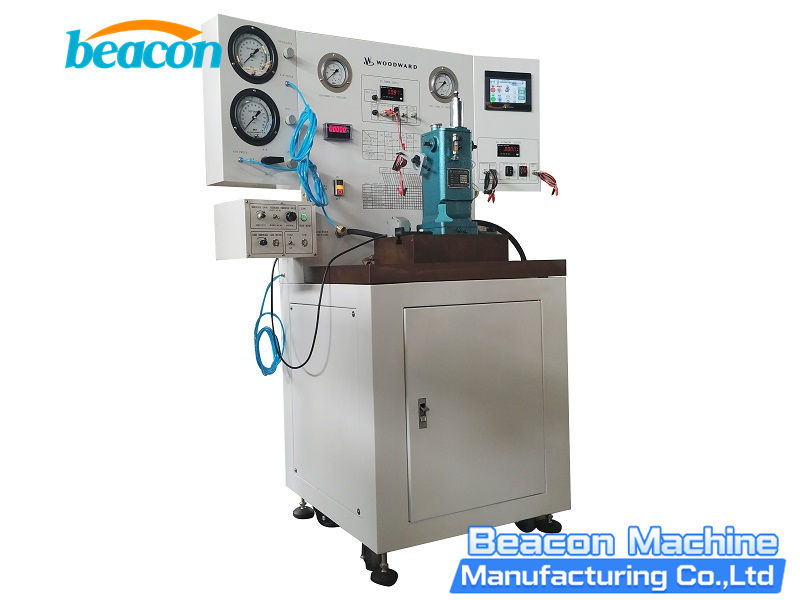
A ship's engine is only as reliable as its governor. The governor — often called the "brain" of the diesel engine — automatically controls fuel delivery to maintain a desired speed under varying load conditions. Without proper governor function, even the most well-maintained engine becomes unpredictable and dangerous. Yet many vessel operators and diesel technicians overlook the importance of routine governor testing. Here's why regular governor testing is not just recommended — it's essential.
What Does a Governor Do?
The governor's primary job is to regulate engine speed by adjusting fuel injection based on load changes. When a ship encounters rough seas, the propeller load changes constantly. The governor responds instantly, increasing or decreasing fuel to maintain stable RPM. This precise control prevents overspeeding (which can destroy an engine in seconds), reduces fuel consumption, and ensures smooth operation.
Common Governor Problems
Over time, governors develop issues due to wear, contamination, or improper adjustment:
- Sticking linkages cause erratic speed control
- Worn hydraulic components lead to pressure loss
- Contaminated oil degrades internal parts
- Incorrect droop settings cause hunting (speed oscillation)
- Failed actuators result in complete loss of speed control
Six Critical Parameters That Demand Testing
1. Governor Oil Pump Pressure
The hydraulic oil pump must maintain specified pressure (typically 0.8–2.1 MPa depending on governor model). Low pressure causes sluggish response; excessive pressure can damage seals and servo mechanisms. On a test bench, pressure is measured directly at the pump outlet with the governor operating at rated speed under load.
2. Speed Regulation Accuracy (Droop)
Speed droop is the percentage reduction in engine speed from no-load to full-load conditions. Most Woodward governors have adjustable droop settings from 0% (isochronous) to 10%. Incorrect droop causes hunting (oscillating speed) when engines operate in parallel, leading to uneven load sharing on multi-generator installations.
3. Compensation and Stability
The compensation needle valve controls how quickly the governor responds to load changes. Too little compensation causes overshoot and hunting; too much compensation makes the governor sluggish. Testing verifies the governor returns to stable speed within 2–3 oscillations after a load change.
4. Safety Shutdown Devices
Governors incorporate multiple safety systems: low oil pressure shutdown, overspeed trip, emergency stop solenoid, and remote shutdown inputs. Each must be tested to activate at the correct setpoint. A failed safety device that goes undetected could mean the difference between controlled shutdown and catastrophic overspeed failure.
5. Terminal Shaft Stroke and Feedback
The output shaft must travel through its complete mechanical range without binding. Worn bushings or bent linkages restrict travel, preventing the engine from reaching full power or achieving minimum fuel position. The test bench measures stroke in millimeters and confirms linear response.
6. Load Limit and Fuel Limiting Functions
Marine governors include load limit controls that prevent fuel delivery from exceeding a preset maximum. These are critical during engine startup, transient load acceptance, and maneuvering.
Common Governor Failure Modes Found During Testing
| Failure Mode | Root Cause | Detection on Test Bench |
|---|---|---|
| Hunting (speed oscillation) | Worn compensation needle valve, incorrect droop setting, or contaminated oil | Speed trace shows continuous ±15–50 RPM oscillation |
| Slow response to load change | Low oil pump pressure, sticking servo piston, or blocked oil passages | Recovery time exceeds 3 seconds after 25% load step |
| Overspeed trip fails | Frozen flyweights, broken trip spring, or seized linkage | Overspeed test: governor fails to trip at specified RPM |
| Erratic speed at low idle | Worn speeder spring, damaged thrust bearing, or internal leakage | Speed drifts more than ±10 RPM at minimum setting |
| Fuel rack fails to reach full position | Terminal shaft binding, incorrect linkage adjustment, or actuator limitation | Output stroke measures less than specified range |
Why On-Engine Testing Is Insufficient
- Cannot measure hydraulic pump pressure independently of engine oil pressure
- Cannot isolate governor response from engine dynamics (turbocharger lag, cylinder misfire, fuel quality)
- Cannot safely test overspeed trip without risking engine damage
- Cannot verify compensation settings with precision because load changes are uncontrolled
- Temperature, vibration, and accessibility constraints prevent thorough inspection
A dedicated governor test bench like the BK2000 Marine Speed Governor Test Bench provides controlled, repeatable test conditions. It supplies regulated oil pressure at controlled temperature, applies precise loads through a closed-loop feedback system, and measures speed with ±0.02% accuracy.
Recommended Testing Intervals
- Annual testing: Full governor calibration and performance verification
- After repair or overhaul: Complete functional test before reinstallation
- When symptoms appear: Speed instability, poor load sharing, or unexplained fuel consumption increase
- After oil contamination: Hydraulic section test to assess internal wear
Conclusion
Governor testing on a proper test bench is not a luxury—it is a core maintenance procedure that protects engine investment, ensures crew safety, and prevents costly downtime. The parameters that can only be measured on a test bench—internal pump pressure, compensation stability, droop accuracy, and safety trip verification—are the same parameters that determine whether a governor will perform when it matters most.
Related products
Beacon Machine Manufacturing Co.,ltd
Quick Links
contact
WhatsApp: +86-13570429157
Tel / Wechat: 0086-13570429157
Email: ellenzhang@beacon-machine.com
Add: High Technology Industrial Park of Taian city,Shandong province,China


quick order
We will reply to your email within 2 hours