
Beacon Machine Manufacturing Co.,ltd
 Language
  EN
EN RU
RU ES
ES DE
DE EL
EL IT
IT JA
JA KO
KO PT
PT ID
ID SR
SR UK
UK VI
VI TH
TH TR
TR MS
MS BE
BE AR
ARDiscussion on Common Faults and Maintenance of Diesel Injectors
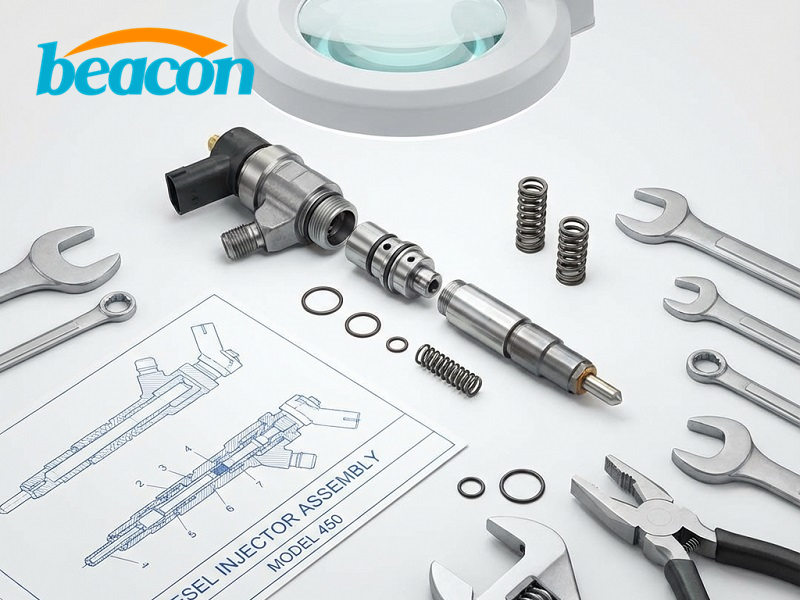
Discussion on Common Faults and Maintenance of Diesel Injectors
The diesel injector is a critical precision component of a diesel engine. The clearance between the needle valve and the valve body is extremely tight (only 0.002-0.003 mm). In practical operation, faults such as unstable injection pressure, needle valve sticking, and seal failure frequently occur. These issues lead to incomplete combustion, increased fuel consumption, power loss, and excessive carbon buildup. Therefore, ensuring the proper function of the diesel fuel injector is vital for engine performance. Below is an analysis of common faults and their troubleshooting methods.
1. Injector Wear
For pintle-type injectors, wear typically occurs on the sealing cone, spray hole, and the guide surface between the needle and valve body.
-
Sealing Cone Wear: Caused by the impact of the injector spring and impurities in the diesel. Wear leads to a wider sealing band and deformation, causing leakage (dripping) at the nozzle tip. This results in intermittent knocking sounds, uneven engine operation, and black smoke.
-
Solution: Disassemble the injector, apply a little fine chrome oxide grinding paste to the needle head, and lap the cone surface. Clean with diesel afterwards. If performance test fails, replace the injector nozzle couple.
-
-
Spray Hole Enlargement: Caused by high-pressure fuel erosion. This drops injection pressure and shortens spray range.
-
Solution: Usually requires replacing the needle valve couple.
-
-
Guide Surface Wear: Caused by impurities. Increases internal leakage, reducing injection quantity and pressure, leading to difficult startups.
-
Solution: Replace the worn nozzle assembly. Always use clean fuel and maintain diesel filters to prevent this.
-
2. Needle Valve Sticking
Sticking is a common failure where the needle cannot move freely.
-
Main Causes: Improper installation causing overheating, lack of cleaning/maintenance, impurities in fuel, or carbon buildup due to sealing failure.
-
Symptoms: The engine emits heavy black smoke, misfires, or produces loud knocking sounds due to fuel accumulation.
-
Solution: If the needle is stuck, it may not be permanently damaged. Soak the diesel injector in hot oil until it smokes slightly, then use pliers (padded with cloth) to gently pull and rotate the needle out. Clean the needle and valve body in clean diesel. Before reassembly, ensure new nozzle parts are cleaned of anti-rust oil.
3. Leakage at the Cylinder Head Connection
Improper sealing between the injector and the cylinder head leads to air and oil leakage.
-
Causes: Uneven washer surfaces, using improper materials (like asbestos) instead of copper washers, or carbon deposits in the mounting hole.
-
Solution: Clean the carbon deposits thoroughly. Ensure the copper washer is flat and compliant. When tightening the injector plate pressing plate, apply torque evenly to prevent deformation of the injector head.
4. Spray Hole Blockage
Blockage disrupts the fuel supply, often accompanied by knocking sounds.
-
Causes: Long-term idling or carbon deposits formed by poor combustion.
-
Solution: Disassemble the injector and clean the carbon from the nozzle tip. Use a specialized fine steel wire (protruding no more than 2mm to prevent breaking) to clear the spray holes. Ultrasonic cleaning is also effective for modern common rail injectors.
5. Injection Pressure Issues (Too High or Too Low)
-
High Pressure Causes: Needle valve sticking, spring tension too high, or clogged holes.
-
Low Pressure Causes: Worn guide surface, leaking nozzle seat, loose adjustment screw, or broken injector spring.
-
Consequences: Both extremes cause unstable engine operation, power loss, and poor atomization. Low pressure leads to carbon buildup and smoke; high pressure causes rough running and can damage the injection pump plunger.
-
Solution: Adjust the pressure screw properly on a test bench and replace worn parts immediately.
By strengthening the maintenance of the fuel injection system, you can significantly extend the service life of the diesel engine. Always ensure high-quality replacement parts are used during repairs.
Related products
Beacon Machine Manufacturing Co.,ltd
Quick Links
contact
WhatsApp: +86-13570429157
Tel / Wechat: 0086-13570429157
Email: ellenzhang@beacon-machine.com
Add: High Technology Industrial Park of Taian city,Shandong province,China


quick order
We will reply to your email within 2 hours