
Beacon Machine Manufacturing Co.,ltd
 Language
  EN
EN RU
RU ES
ES DE
DE EL
EL IT
IT JA
JA KO
KO PT
PT ID
ID SR
SR UK
UK VI
VI TH
TH TR
TR MS
MS BE
BE AR
ARHow to Start a Diesel Injector Repair Workshop: Essential Machines, Tools and Budget
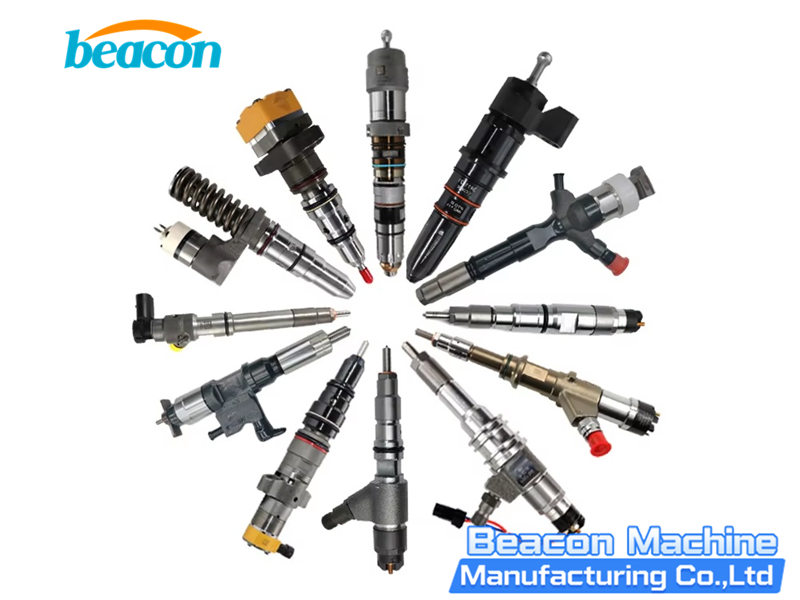
Starting a diesel injector repair workshop can be a profitable specialist business, but only when the equipment, service scope, workflow, and budget are planned together. The biggest mistake is buying a test bench first and deciding what services to offer later. A workshop designed for common rail passenger-car injectors has very different requirements from one that also repairs pumps, EUI/EUP units, HEUI injectors, or heavy-duty applications.
This guide explains the essential machines and tools, realistic startup budget ranges, workshop layout, staffing, and a practical launch plan. All budget figures are planning estimates in US dollars, not equipment quotations. Freight, import duties, tax, installation, local electrical work, rent, and labor costs vary significantly by country.
1. Define Your Workshop Scope Before Buying Equipment
Begin by studying the vehicles, engines, and injector types that are common in your local market. Then choose one of three business models.
Level 1: Injector Testing and Diagnosis
This is the lowest-risk entry point. The workshop removes contamination, performs visual and electrical checks, tests common rail injectors, prints reports, and refers advanced internal repairs to a specialist. It requires fewer precision repair tools, but the test bench still needs reliable pressure control, accurate flow measurement, return-flow testing, and a current database.
Level 2: Common Rail Injector Testing and Repair
This model adds controlled disassembly, component inspection, nozzle and control-valve replacement, internal adjustment, calibration, coding, and final verification. It requires a clean repair room, brand-specific tools, measuring instruments, repair data, and trained technicians.
Level 3: Full Diesel Fuel-System Center
A full-service center handles common rail injectors and pumps, mechanical pumps, EUI/EUP, HEUI, and selected heavy-duty or marine systems. It offers the largest revenue opportunity, but also demands more floor space, electrical capacity, fixtures, software, training, inventory, and working capital.
| Workshop Model | Typical Services | Estimated Startup Budget |
|---|---|---|
| Testing and Diagnosis | Common rail injector testing, leak-off comparison, reports, basic cleaning | US$15,000–30,000 |
| Injector Testing and Repair | Testing, disassembly, component replacement, adjustment, coding and retesting | US$35,000–80,000 |
| Full Diesel Fuel-System Center | Injectors, pumps, EUI/EUP, HEUI and broader heavy-duty work | US$80,000–180,000+ |
These ranges exclude purchasing a building. A premium authorized repair concept, extensive inventory, or major facility renovation can take the total well beyond these figures.
2. The Main Common Rail Injector Test Bench
The test bench is the core production machine. Do not choose it only by maximum rail pressure or price. Check whether it can perform the actual test plans required by your target market.
A professional injector workshop should evaluate the following capabilities:
- support for Bosch, Denso, Delphi, Siemens/VDO, and other locally common brands;
- testing of solenoid and piezo injectors;
- stable rail-pressure control across cranking, idle, medium-load, and full-load conditions;
- accurate injection-quantity and return-flow measurement;
- leak-tightness, pilot-injection, response-time, and BIP testing where applicable;
- injector coding for the brands you intend to service;
- regular database updates and remote technical support;
- printable test reports for customers and warranty records;
- availability of adapters, cables, fixtures, and future expansion kits;
- local voltage, phase, frequency, cooling, and compressed-air compatibility.
For a workshop that plans to test common rail injectors and pumps while retaining room to expand into EUI/EUP and HEUI work, the CR1017 multifunction common rail pump and injector test bench is an example of a combined platform that can support a broader service scope within one machine.
3. Cleaning and Contamination-Control Equipment
Modern injectors contain extremely small clearances. Dirt that is harmless in a general mechanical workshop can ruin a control valve, nozzle, or repaired injector. Contamination control is therefore part of the production process—not just housekeeping.
Essential cleaning equipment includes:
- a professional ultrasonic cleaner with suitable baskets and temperature control;
- a filtered parts-washing system compatible with the cleaning chemistry;
- clean compressed air with an air dryer, oil separator, and fine filtration;
- lint-free wipes, covered stainless-steel trays, clean containers, and protective caps;
- separate dirty-disassembly and clean-assembly work areas;
- proper storage and disposal arrangements for used calibration oil, solvent, and contaminated materials.
An ultrasonic cleaner can remove deposits, but it cannot repair erosion, pitting, or excessive internal clearance. Cleaning should never be sold as a substitute for measurement and calibration.
4. Injector Disassembly and Assembly Tools
Generic sockets and clamps are not sufficient for precision diesel work. A serious repair workshop needs model-specific tooling that holds the injector without damaging sealing surfaces or distorting the body.
Your initial tool package should include:
- soft-jaw injector vises and secure holding fixtures;
- nozzle cap-nut sockets for the brands and injector families you service;
- control-valve, solenoid, armature, and internal-nut tools;
- injector dismantling and assembly fixtures;
- calibrated torque wrenches covering low and medium torque ranges;
- needle, valve, and nozzle handling tools;
- shim kits and organized small-parts storage;
- injector inlet, return, and nozzle protective caps;
- brand-specific adapters, cables, and electrical connectors.
Buy tooling according to the first 20–30 injector part numbers you expect to receive most often. A smaller, frequently used tool set produces a faster return than a large collection of rarely used fixtures.
5. Precision Measuring and Calibration Tools
Replacing a control valve or nozzle does not automatically restore an injector. Internal dimensions must be measured and adjusted according to verified data.
Depending on the injector families, the workshop may need:
- digital and mechanical micrometers;
- dial indicators with rigid stands;
- depth gauges and bore-measuring tools;
- armature-lift, air-gap, needle-lift, and dynamic-stroke fixtures;
- electrical resistance and insulation testers;
- a precision balance for selected component and calibration work;
- reference master injectors or verification devices recommended by the equipment supplier;
- a documented calibration schedule for the test bench and hand instruments.
Measurement tools should be stored in the clean area and protected from temperature changes, impact, and contamination.
6. Vehicle Diagnosis and Pre-Test Equipment
Many injectors are removed unnecessarily because the original fault is caused by fuel supply, wiring, rail-pressure control, compression, or the ECU. Adding vehicle diagnosis improves customer trust and creates another revenue stream.
Useful diagnostic equipment includes:
- a multi-brand scan tool with live rail-pressure and cylinder-correction data;
- a digital multimeter and current clamp;
- a suitable oscilloscope for injector current and control-signal analysis;
- approved on-engine return-flow test kits;
- low-pressure fuel-supply test equipment;
- a battery support unit for stable cranking and diagnostic work.
7. Workshop Utilities and Infrastructure
Before ordering the main machine, confirm the installation requirements. A large test bench may require three-phase power, a dedicated circuit, stable grounding, cooling-water connections, ventilation, and a properly sized compressor.
Plan for:
- the correct voltage, phase, frequency, circuit protection, and emergency isolation;
- clean, dry compressed air at the required pressure and flow;
- temperature control for the test and clean-assembly areas;
- local exhaust or ventilation appropriate to the fluids and cleaning chemicals used;
- fire extinguishers, spill kits, eyewash facilities, gloves, and eye protection;
- secure chemical storage and compliant waste-fluid handling;
- stable internet access for software updates and remote support;
- backup power or surge protection for computers and control electronics.
High-pressure diesel fuel can penetrate skin and cause life-threatening injury. Test benches must be operated with guards in place, correct fittings, approved hoses, and trained personnel. Local fire, electrical, environmental, and occupational-safety rules always take priority.
8. A Practical Startup Budget Breakdown
The following example shows how a professional common rail injector testing-and-repair workshop might allocate a US$50,000 startup budget.
| Budget Category | Example Allocation | What It Covers |
|---|---|---|
| Main test bench and standard accessories | US$20,000 | Injector testing, software, standard adapters, delivery and setup allowance |
| Repair tools and precision measurement | US$7,000 | Holding fixtures, sockets, torque tools, gauges and adjustment tools |
| Cleaning and compressed-air system | US$4,000 | Ultrasonic cleaner, air treatment, trays and cleaning supplies |
| Facility preparation and safety | US$6,000 | Electrical work, benches, ventilation, lighting, storage and safety equipment |
| Diagnostic equipment and computer | US$3,500 | Scan tool, electrical testing, office computer and printer |
| Training, calibration and launch marketing | US$3,500 | Operator training, initial verification, branding and customer acquisition |
| Initial parts, fluids and working capital | US$6,000 | Fast-moving repair parts, calibration oil, consumables and cash reserve |
Do not spend the entire budget on equipment. A workshop with an excellent test bench but no cash for parts, freight, calibration oil, wages, or warranty rework can stop operating before it develops a customer base.
9. Monthly Operating Costs to Include
Startup cost is only half of the financial plan. Estimate the monthly cost of:
- rent, utilities, compressed air, cooling, and internet;
- technician and administrative wages;
- test oil, filters, cleaning chemicals, seals, caps, and packaging;
- software subscriptions and database updates;
- calibration, preventive maintenance, and replacement sensors;
- freight and inventory financing;
- warranty reserves and repeat testing;
- insurance, licensing, waste disposal, and local compliance;
- marketing, pickup and delivery, and customer communication.
10. Workshop Layout for Clean and Efficient Work
A practical layout should move each job in one direction:
- Receiving and identification: photograph the injector, record the part number, customer complaint, and vehicle information.
- Dirty inspection: check external damage, contamination, and electrical condition.
- Pre-test area: clean the exterior and perform the initial test.
- Disassembly and washing: dismantle and clean components away from the assembly bench.
- Clean measurement and assembly: inspect, measure, adjust, and assemble in a controlled area.
- Final testing and coding: run the complete test plan and print the report.
- Packaging and dispatch: cap all ports, label the injector, attach the test report, and protect it from contamination.
Separating dirty and clean operations reduces rework more effectively than adding more cleaning steps to a poorly organized room.
11. Staffing and Training
A small workshop can begin with one trained diesel technician and one person handling customers, records, procurement, and delivery. The technician must understand more than machine operation. Training should cover injector construction, hydraulic principles, electrical signals, contamination control, internal measurements, coding, fault interpretation, and safe high-pressure work.
Build a controlled library of test reports and repair outcomes. Recording the part number, initial fault, replaced components, adjustments, before-and-after results, and warranty status creates valuable workshop knowledge and reduces repeated mistakes.
12. Calculate Capacity and Break-Even Before Launch
Do not build the business plan around the maximum number of injectors the machine can test. Include receiving, cleaning, setup, diagnosis, customer approval, repair, retesting, reporting, and possible rework.
A simple break-even calculation is:
Monthly break-even jobs = Monthly fixed costs ÷ Average contribution margin per job
For example, if fixed operating costs are US$6,000 per month and the average contribution after parts and direct consumables is US$150 per job, the workshop needs approximately 40 completed jobs per month to cover fixed costs. This is a planning example, not a profit guarantee.
Also measure:
- average turnaround time;
- first-pass test success rate;
- warranty return rate;
- average revenue and contribution per injector;
- test-bench utilization;
- parts inventory turnover;
- referral volume from garages and fleet operators.
13. Common Startup Mistakes
- Buying for the widest possible capability on day one: unused functions tie up capital that should support inventory and marketing.
- Ignoring local vehicle data: a machine is only valuable when its test plans, adapters, and repair tools match local injectors.
- Underbudgeting facility work: power conversion, grounding, air treatment, cooling, and ventilation can be significant costs.
- Mixing dirty and clean work: contamination causes failed calibrations and warranty returns.
- Relying on parts replacement without measurement: injectors require verified dimensions and complete retesting.
- Keeping no working-capital reserve: cash is needed for parts, freight, wages, and unexpected repairs.
- Promising every repair: severely damaged bodies, unavailable parts, or unsupported injector technologies should be declined or referred.
- Skipping documentation: without intake records and test reports, disputes and repeat failures become difficult to manage.
14. A 90-Day Launch Plan
Days 1–30: Market and Facility Planning
- List the 50 most common injector and engine applications in your area.
- Interview repair garages, fleets, parts distributors, and towing companies.
- Select the service scope and calculate the required machine functions.
- Confirm power, air, ventilation, floor space, delivery access, and local permits.
- Request itemized equipment quotations including accessories, training, warranty, freight, and installation.
Days 31–60: Installation and Training
- Prepare clean and dirty work zones.
- Install the test bench, compressor, air treatment, cleaning equipment, and safety systems.
- Complete operator and repair-process training.
- Create intake forms, quotation templates, test reports, warranty rules, and job labels.
- Test known-good and known-faulty samples to validate the complete workflow.
Days 61–90: Controlled Commercial Launch
- Begin with a limited set of injector families.
- Offer garages clear testing prices, turnaround times, and collection options.
- Track every job, result, repair decision, and warranty outcome.
- Expand adapters and repair tooling only when repeated customer demand justifies the investment.
- Review pricing, throughput, rework, and cash flow at the end of each month.
Final Recommendation
The best diesel injector workshop is not necessarily the one with the largest test bench. It is the one whose equipment matches the local vehicle population, whose technicians follow a clean and measurable repair process, and whose budget leaves enough working capital to operate reliably.
Start with a clearly defined service scope, choose equipment that covers the work you can sell now, build strong contamination control and documentation, and expand only when real job volume supports the next investment. That approach creates a safer, more credible, and more sustainable diesel injector repair business.
Related products
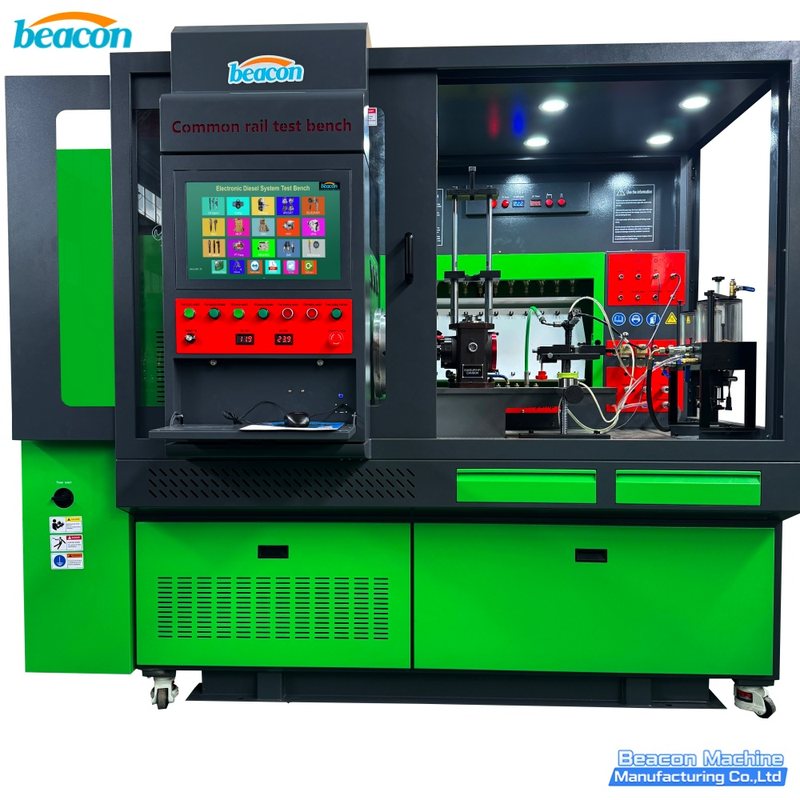
CR919PLUS Common Rail Injector and Pump Test Bench
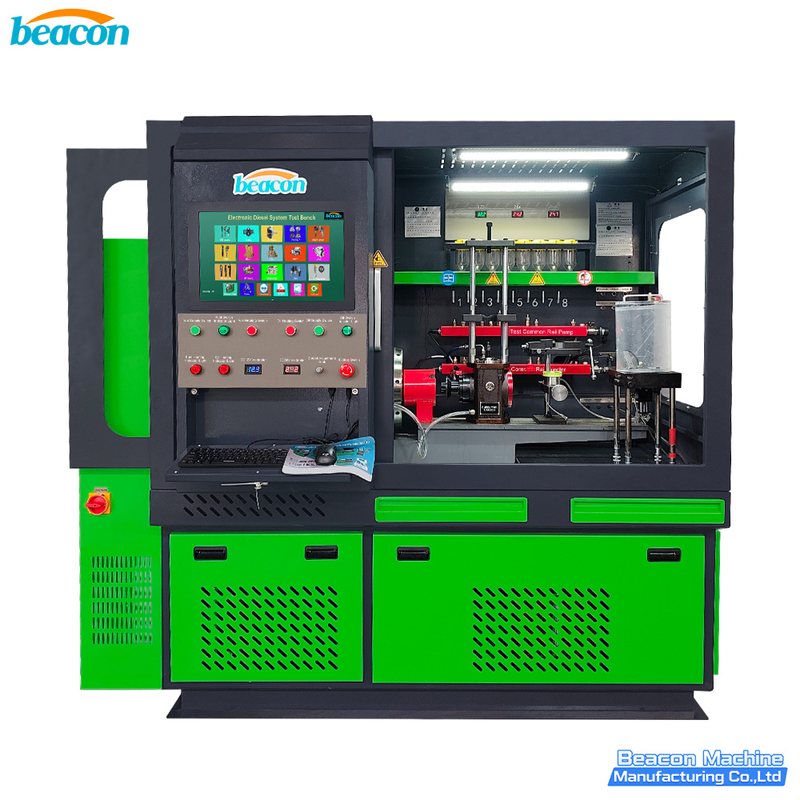
CR910 Common Rail Injector and Pump Test Bench
Beacon BT150 Hydraulic Press Machine For Stretching Bending And Punching Vertical Press Machine
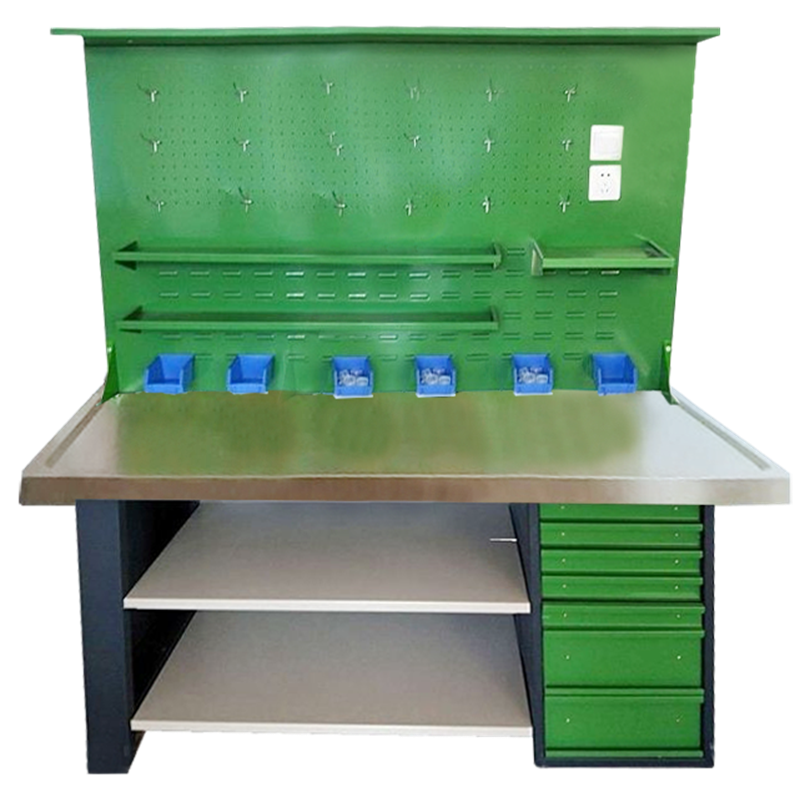
GT-F Electronic Workstation Repairing Anti-static Electrical Workbench Watchmakers Table Electronic Work Bench
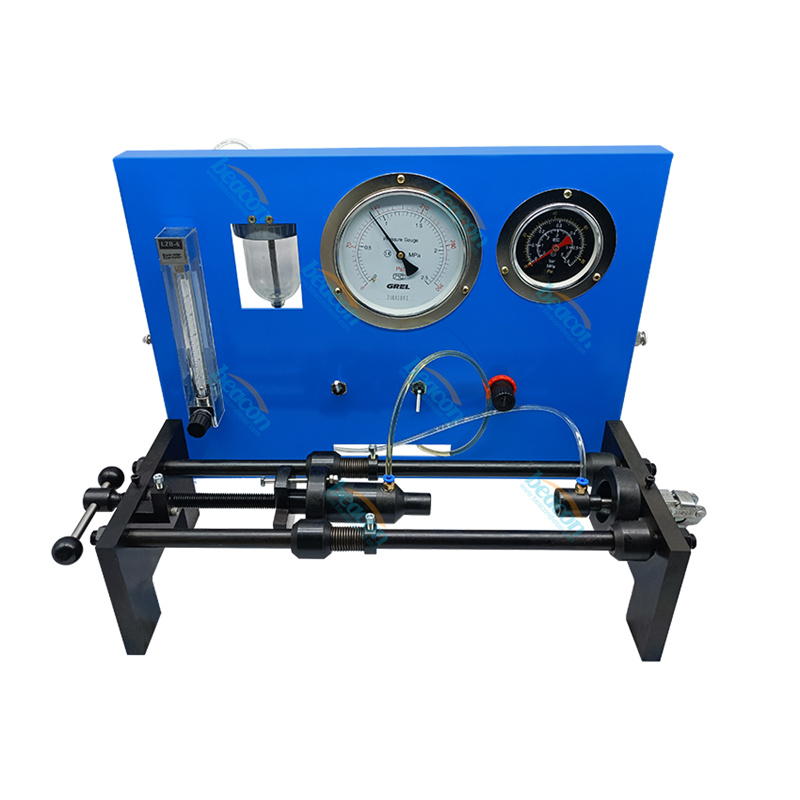
PT301 Leakage Tester Diesel Injector Pump Test Bench For Cummins PT Common Rail Fuel Injection
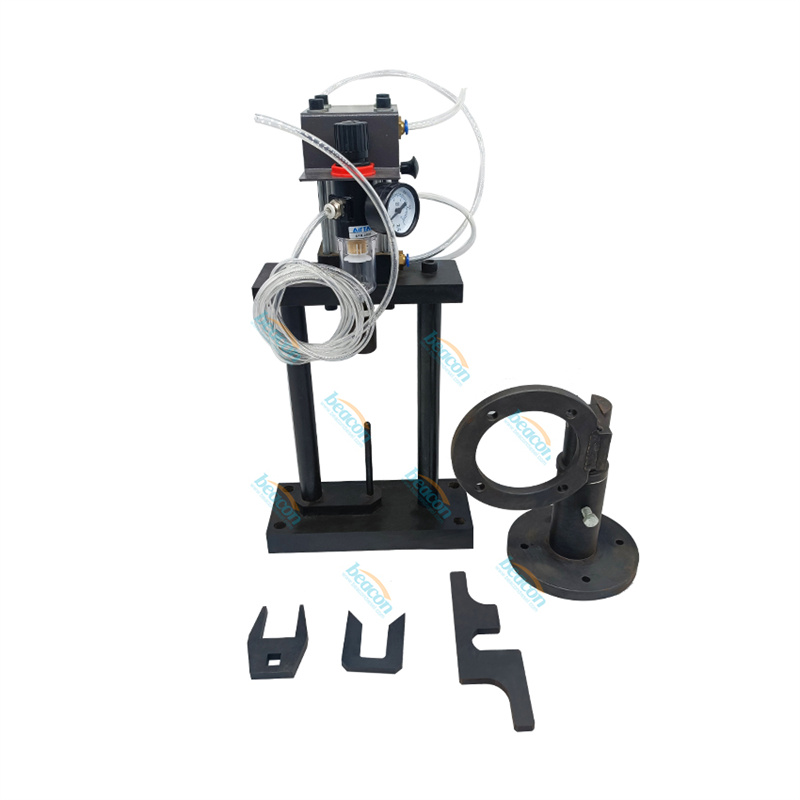
Automatic Diesel Fuel Injection Pump Assemble PT800 PT Pump Injector Disassembly Tool For Cummins
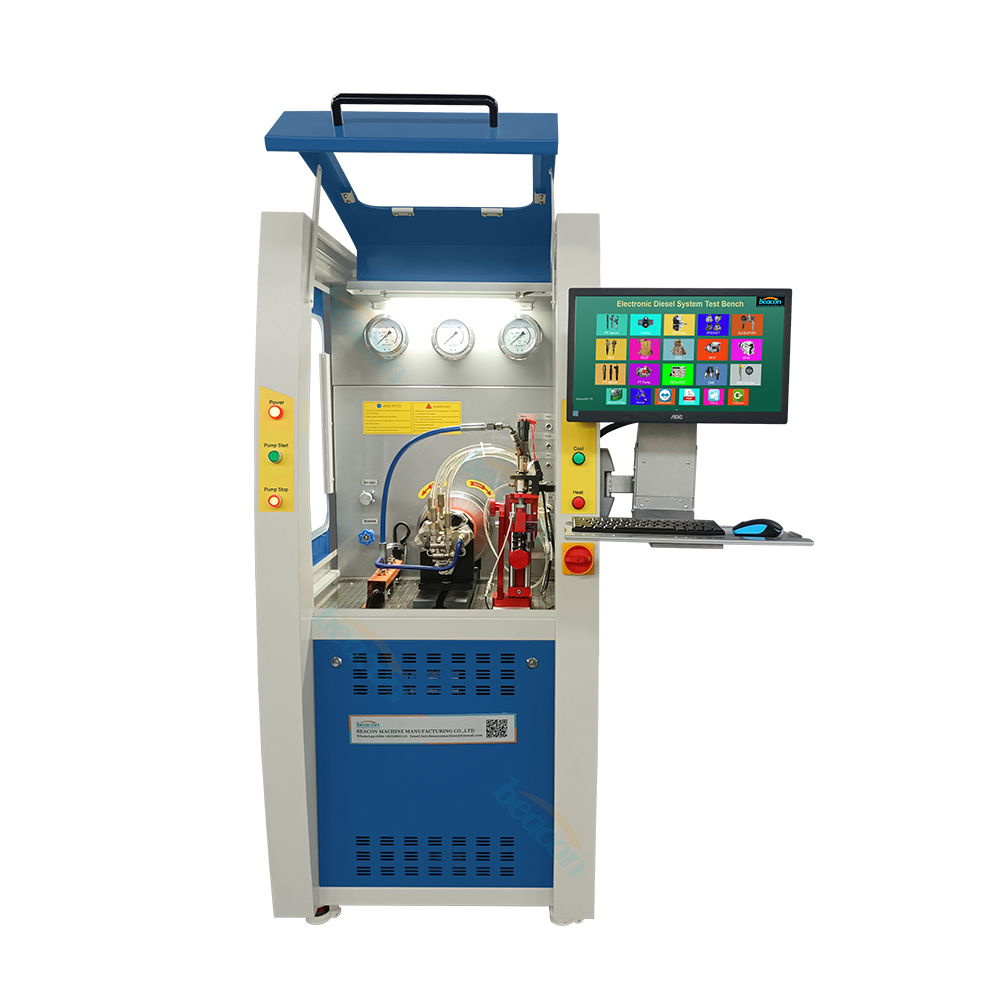
Beacon CR1027 High Pressure Common Rail Electronic Control System Comprehensive Machine Diesel Injector Pump Test Bench
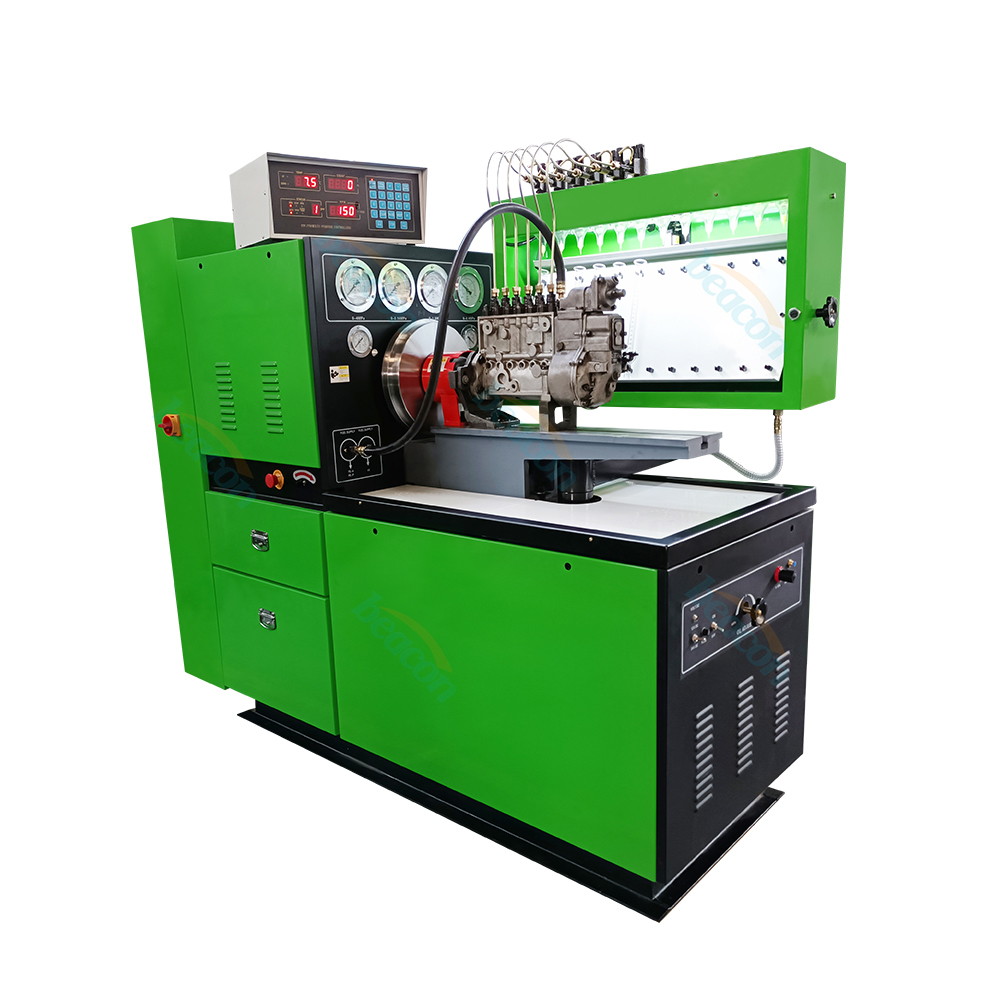
Multifunction Tester 12PSB+E 12 Cylinders Automotive Diesel Injector Injection Pump Test Bench
Beacon Machine Manufacturing Co.,ltd
Quick Links
contact
WhatsApp: +86-13570429157
Tel / Wechat: 0086-13570429157
Email: ellenzhang@beacon-machine.com
Add: High Technology Industrial Park of Taian city,Shandong province,China


quick order
We will reply to your email within 2 hours